Managing coppice in Eucalypt plantations
Note Number: AG0814
Date Published: June, 2000
![]() |
|
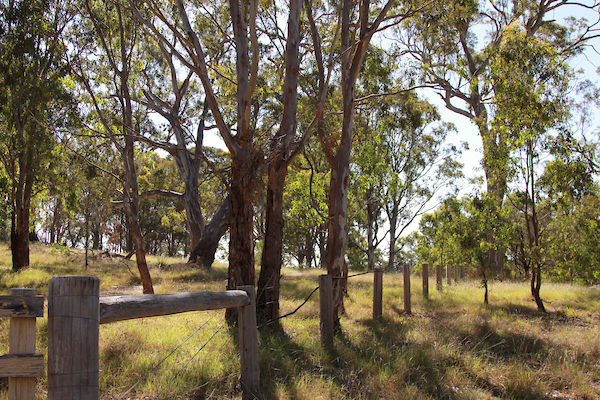
Figure 1. Coppice regrowth – post wildfire. |
This Agriculture Note describes the management of coppice in Eucalypt plantations. Regrowth from a cut tree stump or the base of a damaged stem is known as “coppice” and felling a tree leaving a short stump to encourage regrowth is called coppicing. Coppice growth arises from buds that lay dormant beneath the bark. Figure 1 shows coppice regrowth in a eucalypt forest after a fire. The practice of coppicing, on both short and long rotations, can be traced back to Neolithic times (4000 BC)[1]. Nowadays, the use of coppice in wood production is widespread, especially overseas, as a method for regenerating eucalypt plantations. In Australia, coppice systems are primarily used in firewood and pulpwood plantations and in the management of drier and low yielding forest types.
Advantages and disadvantages of using coppice
The following information on the advantages and disadvantages of using coppice is taken from the book Silvicultural Systems [2].
Advantages
In comparison to the management of other forest silvicultural systems, the advantages of the coppice system are:
- It is very simple in application, and reproduction is usually more reliable and cheaper than reproduction from seed.
- Normally the yield from the first coppice crop is higher than that of the original seedling crop of the same age. Although yield generally drops off in subsequent rotations.
- In the earlier stages, coppice growth is more rapid, and the poles produced are straighter and cleaner than in the same species when raised from seed. Hence, where a large turn out of poles or firewood billets of small to moderate size is required, coppice is generally superior to most other forest management systems.
- Where there is a market for small diameter wood products, coppice is worked on a shorter rotation than most other forest management systems due to the generally, rapid initial growth of coppice stems. There is less capital tied up in the growing stock, and earlier returns are obtained than from other systems. Thus coppice is particularly suitable for small private properties in places where there is demand for the produce yielded by it.
- The variety of habitat provided by different stages of worked coppice is beneficial to wildlife, hence the conservation value of coppice may be higher than that of single age plantations.
Disadvantages
- The material produced from coppice is of comparatively small size. There is, therefore, a limit to its general utility from the viewpoint of timber production, and its financial success depends on the existence of a special demand for the produce yielded by it.
- Coppice draws heavily on the store of nutrients in the soil, particularly if the rotation is short, since it consists largely of vigorous young shoots and branches, which require more nutrients than older wood. This can be overcome by redistributing logging debris through the plantation or through fertiliser application.
- Young coppice shoots of some species are particularly prone to damage by frost. Where frosts are severe, it may be best to time harvesting so that the new coppice sprouts when the danger of frost is over.
Creating coppice
![]() |
|
Figure 2. Healthy coppice regrowth sprouting from a Sugar gum stump. |
Most of the eucalypts, especially those from drier environments, have the ability to coppice readily when they are young. Figure 2 shows healthy coppice in Sugar gum.
However, eucalypts from the ash group such as mountain ash generally do not coppice well. The ability of eucalypts to coppice declines with age. Coppice sprouts from the cambium layer beneath the bark. Larger more vigorous stumps, up to about 30 cm diameter, from young trees tend to coppice best. Older stumps often fail to coppice.
Generally, planted or direct seeded plantations can be satisfactorily coppiced many times over. In Israel, five successive coppice rotations of E. camaldulensis have been obtained and the E. globulus plantations of the Nilgiri Hills in southern India have been cut on a 10 year rotation for almost 100 years and still produce very good yields of fuelwood [2]. However, not all cut stumps will produce coppice and over a number of rotations there will be a progressive decline in the number of live root stocks able to produce coppice. For example, sugar gum (E. cladocalyx), coppices well but about 10% of stumps have been observed to fail to reshoot each time the trees are cut [3]. Large gaps or failed areas can be restocked through replanting or natural regeneration although seedlings starting life in one coppice rotation are not likely to reach maximum vigour until the second succeeding coppice rotation [5].
From the first coppice the rate of shoot growth from the rootstock can be expected to be around 10-20% faster than that of the original trees. However, the vigour of the coppice from subsequent crops tends to decline [4]. Hence, it may be better to re-plant the site with seedlings after 3 or 4 rotations or to apply fertiliser to boost growth rates.
Some species coppice well in some regions though not in others, probably due to environmental conditions.
The ideal time to cut trees for coppice varies for each species. For example, in western Victoria, sugar gum tends to produce the best coppice shoots when the trees are cut in September or October. Generally, in Victoria, tender coppice shoots from trees cut too late into spring run the risk of desiccation under dry summer conditions. Whilst trees cut during late summer and early autumn run the risk of sprouting coppice which may be killed by heavy frost.
Managing coppice to optimise wood production
Coppice can be managed in a number of different ways depending on the desired end product(s). For example, sawlogs, firewood, pulpwood, posts and poles can be produced from trees with 2 or 3 coppice stems, whereas sawn timber is best produced where stem numbers are reduced to one or two.
There are a number of different ways of managing coppice growth. Some systems have been developed to maximise the production of small diameter wood for uses such as fuelwood, whilst other systems, such as the ‘coppice with standards’ system, are used for providing the forest owner with a mix of millable timber as well as posts, poles and fuelwood. Two of the more commonly practiced coppice systems are described below.
Simple coppice system
This system is commonly used in eucalypt plantations around the world. In the simplest coppicing system, all trees are cut down in the one operation at the appropriate time of the year. In established plantations, such as the 20-40 m wide sugar gum belts in western Victoria, an ideal harvesting technique is to remove about half of the trees on the leeward side of the plantation in one year and then cut the windward side trees a few years later. This will allow time for the coppice from the first cut to grow large enough to provide shelter benefits to adjacent farmland when the remaining trees are cut.
To achieve the best possible results from coppicing, trees should be cut on a slight angle to prevent water from pooling in the stump and thus preventing decay of the stump. Stump height affects the success of the coppice and trees should be cut as low to the ground as practical. Aim for a stump height of no more than 15 cm. Coppice growth on high stumps tends to be weak and is more likely to be snapped off in strong winds. Whereas coppice shoots originating near ground level will eventually develop into trees almost as well rooted as those of seedling origin.
If you are planning to apply a controlled burn to the plantation it is preferable to keep logging debris away from the stumps. The inner bark of the stump needs to be kept alive and should not be exposed to excessively hot fire.
Dense coppice shoots usually appear within a month or two of the tree being felled. Over time, these will self thin down to several stems per stump. They can be left to naturally thin out further, but to optimise wood production on the most vigorous and healthiest stems, it is probably best to reduce the number of stems to 2 or 3 by about age three, depending upon the vigour of the species. Using the back of an axe to knock the excess stems off is more effective than cutting them since the latter encourages more shooting [3]. Shoots left on the windward side of the stump are less liable to wind throw than those growing on the leeward side.
As with any young trees, the young coppice needs to be protected from grazing by stock, wallabies, rabbits and hares until out of reach of the animal concerned. Insect attack needs to be carefully monitored in the young coppice especially over the first 3 years. Various bark beetles and leaf-chewing insects can rapidly destroy coppice if left uncontrolled. Diligent surveillance and use of an appropriate insecticide may be necessary when serious insect damage starts to occur.
Coppice with standards
‘Coppice with standards’ is a multi-storey forest or plantation where among the coppice (underwood) some trees (standards or overwood) are grown on for larger size timber [2]. The purpose of this system is:
- to provide a certain proportion of large timber
- to provide seed for natural regeneration, and
- possibly to provide some protection against frost
The system also permits production of smaller posts, poles and fuelwood. The ‘coppice with standards’ system has been used in box-ironbark forests, but there is little information available on growing plantation eucalypts under this system. Nevertheless, European experience, and some of the earlier work of Jacobs’ [5] in eucalypt forests, ‘coppice with standards’ provides some useful ideas for the treatment of eucalypt forests and plantations in Australia.
The general practice of ‘coppice with standards’ is where a stand or plantation of trees is grown on rotations of different lengths. Generally, small numbers of scattered trees of good form are reserved above sprout-coppice stands and left to grow for two or more short coppice rotations. The standards can be of either the same or different species as those grown as coppice sprouts. In plantations they are usually the same species. The standards may be of a single age class or of several age classes; the latter of which is called a compound coppice stand.
A method for producing coppice with standards is as follows:
![]() |
|
Figure 3. Shelterbelt of healthy coppice regrowth (Sugar gum). |
The coppice is clear cut and managed as in the simple coppice system, with the exception that:
- A certain number of the existing stems (standards) are reserved for at least one more coppice rotation and the rest are felled. In European systems these are usually preferred to be of natural or planted seedling origin, but from experience in poorer eucalypt forests in the ACT, Jacobs [5] recommended that they be selected from coppice shoots rather than seedlings, where possible. Jacobs suggests that in natural eucalypt forests, 50-120 coppice stems/hectare may be reserved as standards at the first cutting. However, stems reserved as standards should be erect, have a healthy crown of reasonable size, and a thick bark capable of handling damage which can occur during the cutting of the coppice. Too dense an overstorey will suppress the coppice regrowth.
- Gaps caused by death of stumps or removal of standards are filled up to ensure a future supply of both coppice and standards.
- Standards are grown on until the end of the next or subsequent rotations.
Some species are consistently successful at coppicing eg. Sugar gum, Blue gum, Spotted gum and the box-ironbarks. Figure 3 shows healthy Sugar gum coppice regrowth from a roadside shelterbelt.
However, where the coppicing ability of a species or stand of trees is in doubt, it would be worth taking the time to follow up on the latest farm forestry species research pertaining to your local area. Also, it could be worthwhile undertaking some trial fellings in different seasons and taking note of the coppice production and growth prior to undertaking more extensive harvesting.
Table 1. Eucalypt species with the ability to produce vigorous coppice shoots in Victoria [6]
| Common name | Botanical name |
|---|---|
| Brown mallet | Eucalyptus astringens |
| Gippsland grey box | Eucalyptus bosistoana |
| Southern mahogany | Eucalyptus botryoides |
| River red gum | Eucalyptus camaldulensis |
| Sugar gum | Eucalyptus cladocalyx |
| Tasmanian blue gum | Eucalyptus globulus globulus |
| Victorian blue gum | Eucalyptus globulus bicostata |
| Yellow gum | Eucalyptus leucoxylon |
| Yellow box | Eucalyptus melliodora |
| Grey box | Eucalyptus microcarpa |
| Messmate | Eucalyptus obliqua |
| Red box | Eucalyptus polyanthemos |
| Candlebark gum | Eucalyptus rubida |
| Sydney blue gum | Eucalyptus saligna |
| Red ironbark | Eucalyptus sideroxylon |
| Manna gum | Eucalyptus viminalis |
References
- Crowther, R.E. & Evans, J. (1984). Coppice, U.K. Forestry Commission.
- Matthews, J.D. (1996). Silvicultural Systems, Oxford University Press Inc.
- Bulman, P. (1995), Farmtree$ for the Mount Lofty Ranges, Primary Industries SA, Adelaide.
- Hillis, W.E & Brown, A.G. Eds. (1984)Eucalypts for Wood Production, CSIRO and Academic Press.
- Jacobs, M.R.,(1955). Growth Habits of the Eucalypts, Forestry and Timber Bureau.
- Bird, P.R., Kearney, G.A. & Jowett, D.W., (1996). Trees and Shrubs for South West Victoria, Agriculture Victoria, Technical report no. 205, Jan 1996.
Acknowledgements
Liz Hamilton, Colac
Contacts
Australian Forest Growers (AFG)
PO Box E18
Kingston ACT 2604
Ph. 02 6285 3833
Email: afgnat@safetyweb.com.au
Further information
DPI's Private Forestry Web site: http://www.dpi.vic.gov.au/privateforestry
DSE Customer Service Centre -Ph. 136 186
Further reading
See other Timber Notes in the Agriculture Notes series related to stand management (via the Private Forestry Web site).
Cremer, K. Ed. (1990)
Trees for Rural Australia,
CSIRO, Inkata Press. pp. 114-117